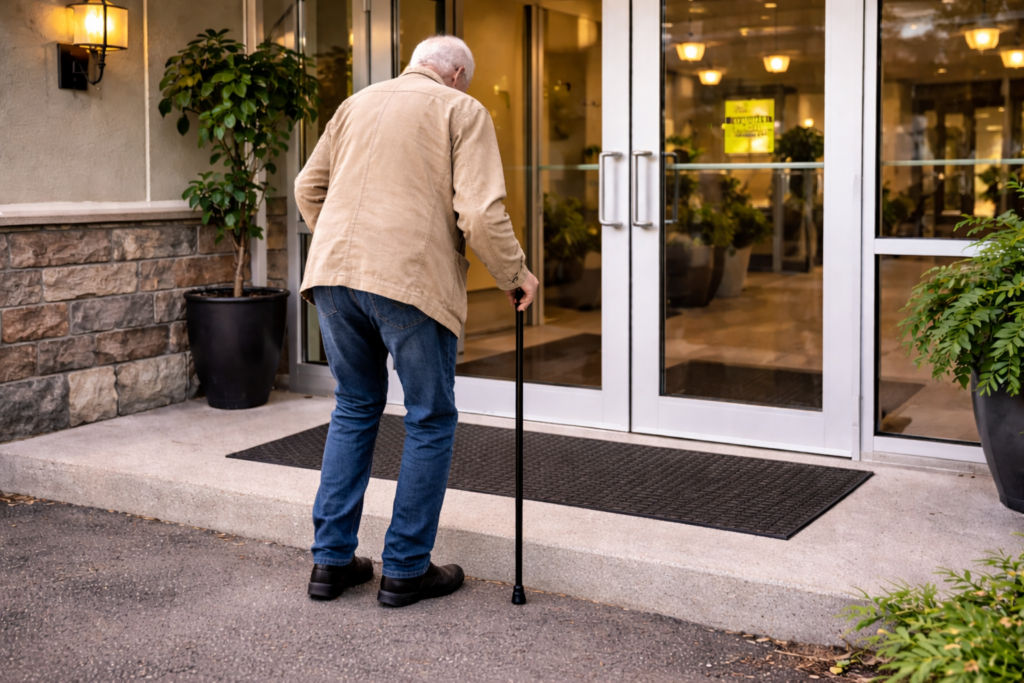
In a community with a high density of seniors, the built environment often determines the boundary between a resident being an active neighbor or a shut-in. The “standard” approach to housing usually focuses on aesthetics and resale value, but the “aha!” moment for a county is realizing that most of our housing stock is designed for “Peter Pan”—people who will never grow old or experience a change in mobility. When we build or zone for a senior-heavy population, we have to move beyond just “handicap accessible” and prioritize “Visitability”.
A visitable home isn’t just for the person living there; it’s designed with a zero-step entrance, 32-inch wide doorways, and a main-floor bathroom so that an older friend or family member can actually come inside. Without these basics, a neighborhood’s social fabric begins to fray as residents stop hosting or visiting each other due to the “threshold barrier.”
A visitable home isn’t just for the person living there; it’s designed with a zero-step entrance, 32-inch wide doorways, and a main-floor bathroom so that an older friend or family member can actually come inside. Without these basics, a neighborhood’s social fabric begins to fray as residents stop hosting or visiting each other due to the “threshold barrier.”
Standard planning often separates residential areas from commercial hubs, assuming everyone can drive or walk long distances. For older residents, this distance is a form of exclusion. A senior-centric built environment prioritizes mixed-use development and “pocket parks” with frequent, high-quality seating and shade. These aren’t just amenities; they are “recharge stations” that allow a senior to break a walk into manageable segments. When a neighborhood provides “visual breadcrumbs”—like high-contrast wayfinding and familiar landmarks—it reduces the cognitive load of navigation, allowing those with early-stage memory changes to remain independent and active Increased need for home modifications