
CAREGIVER SYSTEMS
Caregivers
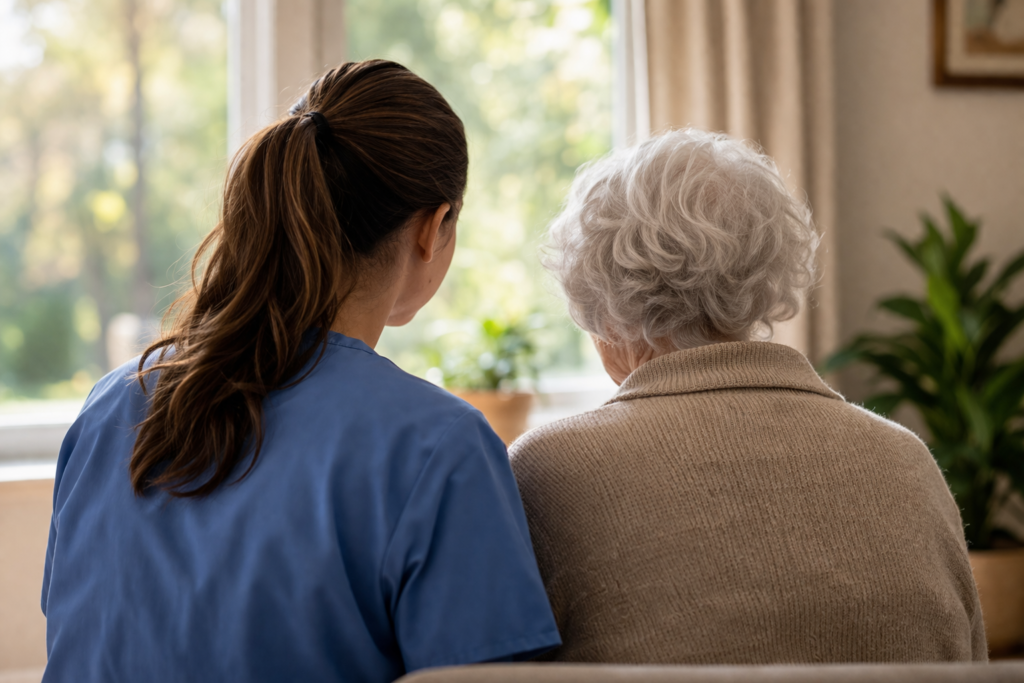
In a community with a high density of seniors, caregivers are the invisible backbone of the infrastructure. The “standard” view sees caregiving as a private family duty, but for a county, it is a critical public health workforce that prevents the collapse of local emergency rooms and long-term care facilities. The “aha!” realization for planners is that the senior is only as safe as their caregiver is supported. When a caregiver experiences burnout—often due to the relentless physical strain of lifting or the emotional toll of managing dementia—the quality of care declines, leading to higher rates of senior falls, medication errors, and emergency hospitalizations.
To fit the needs of older residents, a community must treat caregivers as “second-order patients” who require their own specific infrastructure. This means moving beyond simple pamphlets to providing systemic respite pathways. Standard communities might have a senior center, but a senior-dense county needs “High-Needs Day Stays” that allow a caregiver to drop off a loved one for four to six hours in a facility equipped for high-level mobility or cognitive support. By providing these brief but regular windows for the caregiver to attend to their own health, sleep, or finances, the community preserves the long-term viability of the home-based care model.
Finally, the “caregiver gap” is most dangerous during local disasters. Standard emergency plans often assume a one-to-one ratio of able-bodied helpers, but in many senior households, the “caregiver” is also a senior with their own physical limitations. A forward-thinking community integrates Caregiver Support Teams into its emergency registry. These teams don’t just evacuate the senior; they assist the caregiver with the “logistics of the fragile”—carrying heavy medical equipment, managing 30-day medication kits, and ensuring that mobility aids like electric lift chairs or walkers are transported alongside them. By protecting the caregiver’s physical and mental capacity, the community ensures that its oldest residents remain connected, cared for, and out of institutional settings.